Vitamin B12 Deficiency Injection Dose Vitamin B12 for Injection Cyanocobalamin 1,000 mcg, 25/Box (Rx) — Mountainside Medical
Vitamin B12 Deficiency Injection Dose: What I Use, What to Watch, and How to Avoid Common Pitfalls
If you’ve ever had a patient (or a family member) labeled with “vitamin B12 deficiency” and then stared at the next steps—lab confirmation, cause-finding, and a vitamin b12 deficiency injection dose plan—you already know the real challenge isn’t the prescription name. It’s getting the dose right for the diagnosis, monitoring the response, and avoiding preventable mistakes like incomplete repletion or ignoring the underlying cause (like pernicious anemia or medication-related malabsorption).
In this guide, I’ll walk through practical, clinician-style considerations for cyanocobalamin (vitamin B12) injections—how dosing is commonly approached, what timelines to expect, and which red flags should change how urgently you evaluate. I’ll also show how I think about safety and follow-up in real-world dispensing and care coordination.
What Cyanocobalamin Injections Are (and Why the “Dose” Matters)
Cyanocobalamin is a synthetic form of vitamin B12 used for injection in specific clinical situations—particularly when oral absorption is unreliable or when symptoms require faster correction.
Here’s the logic I use to frame injection dosing decisions: B12 repletion is about restoring functional B12 in tissues and then maintaining it. If the underlying cause of deficiency remains (for example, autoimmune gastritis causing pernicious anemia, bariatric surgery, or long-term metformin use), the patient often needs ongoing therapy rather than one-time repletion.
In my hands-on work coordinating with clinics and pharmacies, the most common “dose problems” aren’t math errors—they’re process errors:
- Assuming a single injection is enough when the patient actually needs a structured repletion/maintenance plan.
- Not tracking response (symptoms and relevant labs), leading to prolonged deficiency or unnecessary repeat treatment.
- Missing the etiology (cause) so therapy ends too soon.
- Overlooking co-factors that can complicate interpretation of labs and symptoms.
Vitamin B12 for Injection (Cyanocobalamin 1,000 mcg): How I Think About Dosing
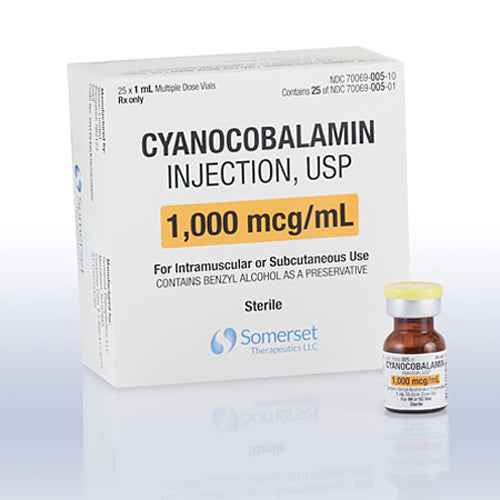
The product referenced here is Vitamin B12 for Injection Cyanocobalamin 1,000 mcg, 25/Box (Rx) from Mountainside Medical. The key dosing feature you should recognize is the concentration per dose: 1,000 micrograms (mcg) per injection unit.
How the “1,000 mcg” piece fits into a vitamin b12 deficiency injection dose plan
“Injection dose” usually refers to two things: the amount per injection (here, 1,000 mcg) and the schedule (how often and for how long). The schedule is what changes based on severity, neurologic involvement, cause, and clinician preference.
In practice, many care pathways use a repletion phase (more frequent dosing) followed by a maintenance phase (less frequent dosing). I’ve seen significant variability across institutions, so the safest approach is to follow the prescriber’s schedule while understanding the rationale behind it.
Common clinical goals during repletion
When clinicians choose a structured repletion schedule, they’re typically targeting:
- Hematologic recovery (improving anemia parameters and correcting associated blood count abnormalities)
- Symptom improvement (fatigue, glossitis, neuropathic symptoms—though neurologic recovery can be slower)
- Biochemical normalization (improving functional markers over time)
What timelines I generally plan around (experience-based)
In real workflows, I encourage teams to set expectations early:
- Early response can show up within weeks for hematologic improvement.
- Neurologic recovery (tingling, numbness, balance issues) may take longer and isn’t guaranteed—earlier treatment tends to help.
- Maintenance decisions typically follow reassessment of cause and lab trends.
Because B12 deficiency can overlap with other nutrient deficiencies or conditions, I’ve found that symptom tracking plus targeted lab monitoring is more useful than relying on “dose count” alone.
Practical Dosing Considerations I’ve Seen Make or Break Outcomes
Even when the vitamin b12 deficiency injection dose is correct on paper, outcomes can stall if key details are missed. Here are the factors I pay attention to.
1) Confirm the deficiency—and look for the cause
Before or during repletion, clinicians often evaluate why B12 is low. In my experience, cause matters because it determines whether injections stop after repletion or continue as ongoing therapy.
- Malabsorption (e.g., pernicious anemia, GI disorders)
- Medication-associated deficiency (e.g., certain chronic medications)
- Dietary factors (less common for true injection requirements, but still relevant)
2) Monitor response with the right lens
I’ve seen labs interpreted too narrowly. If someone improves clinically but lab markers lag, it still may be appropriate to continue the plan while monitoring trends. Conversely, persistent symptoms may signal incomplete correction, ongoing cause, or an alternative diagnosis.
3) Neurologic symptoms change urgency
If a patient has neurologic symptoms, delays can worsen recovery prospects. In real-world coordination, this is where dose schedule adherence and fast follow-up become critical.
4) Safety and tolerability: be realistic
Cyanocobalamin injections are widely used, but no therapy is without limitations. Possible issues include injection-site discomfort and, rarely, hypersensitivity reactions. The practical step I recommend in care pathways is ensuring patients know what to report and when to escalate.
5) Avoid “one-size-fits-all” thinking
“Vitamin B12 deficiency injection dose” is not just a number; it’s a plan. Two patients with the same measured B12 level can require different approaches based on cause, severity, and symptom profile.
FAQ
What is the typical vitamin b12 deficiency injection dose for cyanocobalamin 1,000 mcg?
The common dosing “unit” for this product is 1,000 mcg per injection; however, the schedule (frequency and duration) varies by diagnosis severity, cause (malabsorption vs dietary), and whether neurologic symptoms are present. Follow the prescriber’s repletion and maintenance plan rather than dosing based only on the vial strength.
How long does it take to feel better after B12 injection therapy?
In many cases, improvement in anemia-related symptoms can be seen within weeks, while neurologic symptoms may take longer and may not fully resolve if treatment starts late. I recommend tracking symptoms alongside the clinician’s follow-up labs and reassessment timeline.
When should I (or the patient) follow up urgently after starting injections?
Urgent follow-up is warranted for worsening neurologic symptoms, significant new neurologic deficits, signs of allergic reaction, or lack of expected clinical improvement after the initial repletion period. If there’s uncertainty about whether the deficiency is due to malabsorption and whether maintenance will be needed, follow up promptly for cause-based planning.
Conclusion: Turn the Dose Into a Complete Plan
The right vitamin b12 deficiency injection dose is more than “1,000 mcg” on an order—it’s a repletion-and-maintenance strategy tied to cause, symptom severity, and follow-up monitoring. From my experience coordinating care, the biggest wins come from (1) pairing injections with cause evaluation, (2) adhering to the intended schedule, and (3) reassessing response rather than stopping based on dose count alone.
Next step: If you’re starting cyanocobalamin injections, ask the prescriber for the specific repletion schedule, the maintenance plan (if any), and the follow-up labs/symptom checkpoints so the dosing strategy is complete—not just the injection strength.
Discussion